







Shell’s $20bn Investment in Nigeria: Tinubu’s Bold Oil Reforms Spark Global Confidence in 2026

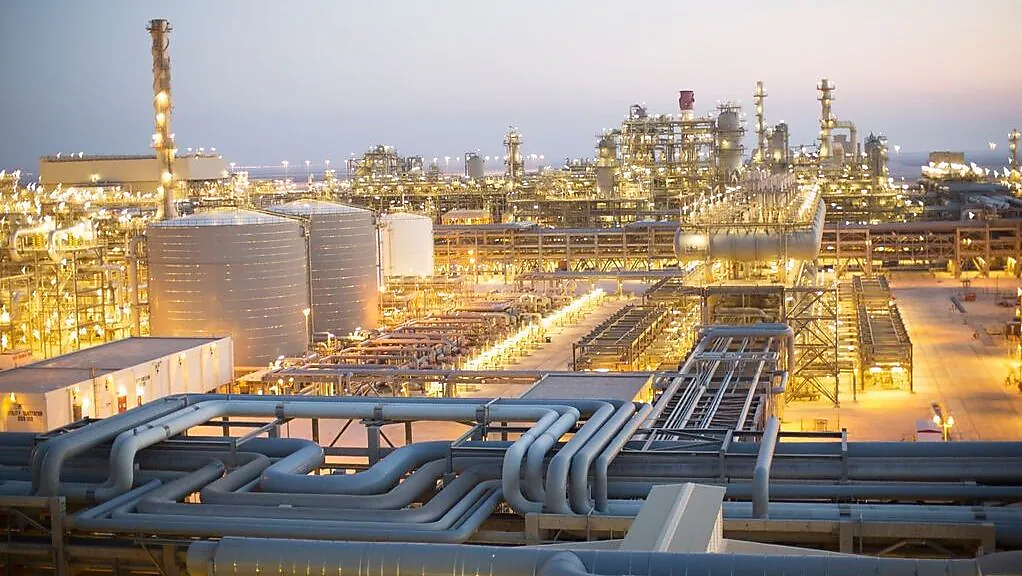
Shell’s $20bn investment in Nigeria has emerged as one of the strongest endorsements yet of President Bola Ahmed Tinubu’s oil and gas reforms, marking a major turning point for Africa’s largest energy producer. The commitment, disclosed after a high-level meeting between Shell’s global chairman, Wael Sawan, and President Tinubu in Abuja, signals renewed investor confidence in Nigeria’s petroleum sector after years of regulatory bottlenecks and capital flight.
Far from being symbolic diplomacy, the engagement represents a concrete shift in Nigeria’s investment climate. With sweeping executive orders, improved fiscal predictability, and renewed security efforts, Tinubu’s administration has repositioned Nigeria as a competitive destination for global energy capital at a time when investors are aggressively shopping for stable hydrocarbon provinces worldwide.
How Tinubu’s Oil Reforms Changed the Investment Narrative
Shortly after assuming office in May 2023, President Tinubu moved swiftly to address structural inefficiencies that had crippled Nigeria’s oil and gas sector for over a decade. Building on the foundation laid by the Petroleum Industry Act (PIA) of 2021, the administration introduced bold executive orders in early 2024 designed to accelerate project approvals and reduce investor uncertainty.
These reforms included streamlined contracting timelines that slashed approval cycles from several years to a matter of months, flexible local content provisions, and incentives aimed at accelerating gas development. Collectively, these measures addressed long-standing complaints by international oil companies about delays, cost overruns, and regulatory unpredictability.
In a global context where countries like Guyana, Namibia, and Angola are competing fiercely for upstream investments, Nigeria’s reforms have helped restore its relevance as a prime hydrocarbon destination.
Shell’s Strategic Response: From Divestment to Expansion
Shell’s actions following Tinubu’s reforms speak louder than policy statements. In September 2024, the company successfully completed a long-delayed $1.3 billion divestment of its onshore assets to Renaissance Africa Energy Corporation — a transaction that had been stalled for nearly a decade due to regulatory challenges.
The successful divestment sent a strong signal to the global investment community that Nigeria now honors both entry and exit pathways for capital. According to NNPC leadership, the transaction alone significantly boosted Nigeria’s credibility among foreign investors, contributing to a reported 15% increase in oil and gas foreign direct investment in 2025.
Encouraged by this improved climate, Shell moved beyond asset restructuring to green-light major new investments, culminating in its pledge of up to $20 billion in new investment opportunities over the coming years.
Bonga North and HI Gas: Cornerstones of the $20bn Investment
A significant portion of Shell’s renewed commitment centers on two major final investment decisions (FIDs). The first is the $5 billion Bonga North project, an extension of the flagship Bonga deepwater field located in OML 118, approximately 50 kilometers southwest of the original Bonga development.
Discovered in 1996, Bonga North holds an estimated 500 million barrels of recoverable oil and is projected to produce up to 110,000 barrels per day when operations commence in 2029. By leveraging existing infrastructure, the project minimizes development costs while maximizing output — a model increasingly favored by investors amid volatile oil prices.
The second major FID is the $2 billion HI Gas project in shallow waters off Bayelsa State. This initiative aligns with Nigeria’s gas commercialization strategy, targeting up to 1.2 billion cubic feet of gas per day for domestic power generation and export markets.
Bonga Southwest: The $10bn Game Changer
Perhaps the most ambitious element of Shell’s renewed engagement is the proposed Bonga Southwest project, estimated at nearly $10 billion including operating expenses. This deepwater extension could unlock as much as 1 billion barrels of oil equivalent, with production capacity rivaling that of Bonga North.
Industry analysts view Bonga Southwest as a litmus test for Nigeria’s reform momentum. A successful final investment decision, expected in 2026, could pave the way for similar developments across more than 20 undeveloped offshore fields in Nigeria’s frontier portfolio.
Reviving Fabrication Yards and Local Content
One of the most immediate benefits of Shell’s $20bn investment in Nigeria is the revival of dormant fabrication yards in Lagos and Port Harcourt. Facilities operated by Nigerian firms such as Nigerdock and Intels, which have remained idle since the 2014 oil price crash, are expected to resume operations.
This revival will drive local content participation through platform fabrication, subsea assembly, FPSO integration, and logistics services. During peak construction, industry estimates suggest that up to 10,000 jobs could be created, with thousands more sustained throughout the projects’ 20- to 30-year lifecycle.
Economic Impact and Nigeria’s Renewed Hope Agenda
Beyond direct investment, Shell’s renewed confidence supports President Tinubu’s broader Renewed Hope agenda, which positions oil revenues as a catalyst for infrastructure development, industrialization, and economic diversification.
Gas projects will support fertilizer production, power generation, and export earnings, while sustained oil output strengthens foreign exchange inflows. With Nigeria targeting production growth from approximately 1.2 million barrels per day to 1.5 million barrels per day, curbing theft and vandalism remains critical.
Security initiatives, including enhanced surveillance and coordinated response frameworks, have already contributed to declining incidents in the Niger Delta — a key factor underpinning Shell’s optimism.
Why Shell’s $20bn Investment Matters Globally
In a global energy market shaped by energy transition pressures, OPEC+ production controls, and competition from emerging oil provinces, Shell’s $20bn investment in Nigeria sends a powerful message. It underscores Nigeria’s enduring relevance, backed by 37 billion barrels of proven reserves and over 200 trillion cubic feet of gas.
By choosing Nigeria as the focal point of its renewed African strategy, Shell has effectively signaled that policy clarity, reform consistency, and political will can still attract large-scale capital even in a rapidly evolving global energy landscape.
Conclusion: A Turning Point for Nigeria’s Oil Future
Shell’s $20bn investment in Nigeria represents more than a corporate commitment — it marks a decisive shift in the country’s oil and gas trajectory. Through decisive reforms, improved governance, and sustained engagement with investors, the Tinubu administration has reignited confidence in a sector long weighed down by uncertainty.
As fabrication yards hum back to life, jobs return, and production expands, Nigeria stands on the brink of a new chapter in its energy story. If reforms remain consistent and security gains are sustained, Shell’s bet may well signal the beginning of a broader renaissance for Nigeria’s black gold economy.


